


What services do you offer? I create and maintain dreadlocks using crochet techniques. I also offer single or double dread extensions in synthetic hair or wool, which are braided into your natural hair. Each service is tailored to your hair type and desired look. Do you specialise in braiding? I do not specialise in general braiding styles. I braid specifically for the installation of single or double dread extensions (synthetic or wool). Do I need to send photos before booking? Yes. Clear, recent photos of your hair are essential if we have not met before. This allows me to assess length, thickness, texture, and current condition so I can advise you properly and schedule enough time for your appointment. How often should I book maintenance? Most clients return every 8 to 12 weeks, especially in the earlier stages. As your dreadlocks mature and settle, many people find they need less frequent maintenance. How long does an appointment take? Maintenance appointments usually take between 2 to 4 hours. New sets or large transformations can take longer depending on length and density. You will receive a time estimate when booking. How should I prepare for my appointment? Please arrive with clean, dry hair and no heavy oils or conditioner. Avoid product build-up before your session. Comfortable clothing is recommended as appointments can be several hours. Do you require a deposit? Yes. A non-refundable deposit secures your booking and protects appointment time. What if I need to reschedule? At least 48 hours notice is required to reschedule. Late cancellations may result in loss of deposit.
What are dreadlocks? Dreadlocks are formed when hair naturally knots and binds together over time. With guidance and maintenance, they develop into structured, intentional sections. They are not “undone” hair, they are evolving hair. Do dreadlocks suit everyone? Dreadlocks can work with many hair types, but they are a commitment. They require patience in the early stages and a willingness to move through changes as they mature. If you are unsure, we can discuss your goals honestly before you decide. What is the journey like in the first year? The first months can feel unpredictable. Your dreadlocks may look loose, fuzzy, or uneven at times. This is normal. Hair is learning a new pattern. With regular maintenance and time, they tighten, settle, and gain character. Will my scalp feel tender? Some sensitivity is normal after maintenance, especially in the early stages. This usually settles within a day or two. Your comfort matters, and I always work with care and attention to your scalp. Can dreadlocks be removed? Yes. Dreadlocks can be combed out with patience and time, especially in earlier stages. The longer they have matured, the more commitment removal requires. Do dreadlocks damage hair? When created and maintained correctly, dreadlocks are simply a way of wearing your natural hair. Healthy scalp care, realistic maintenance intervals, and gentle technique are key to keeping them strong.
What is a dreadlock deep clean? A dreadlocks deep clean is a thorough cleansing treatment designed to remove build-up from inside the locs. Over time, residue from products, hard water, sweat, and everyday life can become trapped within the hair. A deep clean helps lift and release this build-up, leaving your dreadlocks feeling lighter, fresher, and able to dry properly. It can also reduce itchiness and improve scalp comfort. How can I deep clean my dreadlocks at home? For a deeper reset, you can use a bicarbonate of soda and apple cider vinegar soak. You will need: • Bicarbonate of soda • Apple cider vinegar • Warm water • A large bowl, basin, or clean sink • A residue-free shampoo Method: 1.Fill a basin with warm water. 2.Add bicarbonate of soda and apple cider vinegar to the water and allow them to activate together. 3.Submerge your dreadlocks fully and soak for 10 to 15 minutes. 4.Rinse thoroughly. 5.Follow with a residue-free shampoo wash. 6.Rinse for longer than you think you need to. I recommend splitting your hair into sections while rinsing. Gently move each section forward and back, pausing on each side, allowing water to run through fully. Taking extra time with rinsing is essential to ensure no mixture remains trapped inside the locs. Allow your dreadlocks to dry completely after a deep clean to prevent odour or dampness inside the hair. Deep cleans are not needed frequently. If you are unsure whether your hair needs one, I am happy to advise you.
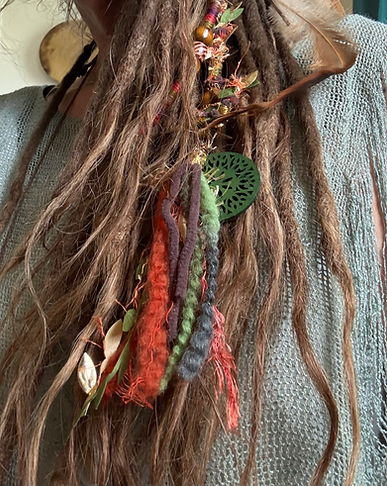
What are braided synthetic or wool dreadlock extensions? Braided dreadlock extensions are temporary installations where synthetic or wool dreadlocks are braided into your natural hair. They allow you to enjoy length, colour, and volume without permanently altering your own hair. They are designed for short-term wear, usually 6 to 10 weeks, and should be professionally removed or replaced to protect your natural hair. What is the difference between single and double ended dread extensions? Single ended (SE) dread extensions: Each dread has one end and is attached by braiding your natural hair to the top of the extension. These feel lighter and sit more naturally with less added bulk. Double ended (DE) dread extensions: Each piece is folded in half, creating two dread lengths from one section. Your natural hair is braided around the folded centre. These create more volume and a fuller look. Synthetic or wool – which is better? Synthetic extensions are smooth, lightweight, and hold colour beautifully. However, they are not for everyone. Some people find synthetic fibres heavier or uncomfortable on the scalp. Wool dread extensions are softer and often feel lighter, making them more comfortable for longer temporary wear. Can I wash them? Yes. You can wash them gently, focusing on cleansing the scalp. Scalp cleansing sprays are also available to refresh the scalp between washes without fully soaking the extensions. Drying thoroughly is essential, especially with wool extensions, to avoid dampness inside the braids. Will they damage my hair? When installed and removed correctly, temporary braided extensions should not damage your natural hair. Proper tension, regular checks, and professional removal are key.